
Children’s Voices: A Creative Exploration of Epistemic Injustice
In July 2026, EPIC worked with members of the Bristol Young People's Advisory Group (YPAG), aged 9–15, in a creative workshop exploring how children and young people are heard and taken seriously. Through discussion and creative activities, participants reflected on what helps them feel listened to, what can prevent adults from taking their views seriously, and what more just practices might look like. Their contributions explored experiences of epistemic injustice from children’s own perspectives and helped inform EPIC’s wider work on children’s voices. A selection of the work created during the workshop is shared below.
Creative Outputs
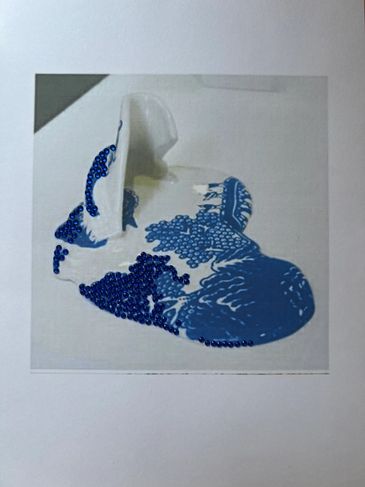
Kanzy, Age 12
My artwork was a melting ceramic vase, and it shows how you can look fine and happy from the outside, but from the inside you can be melted.
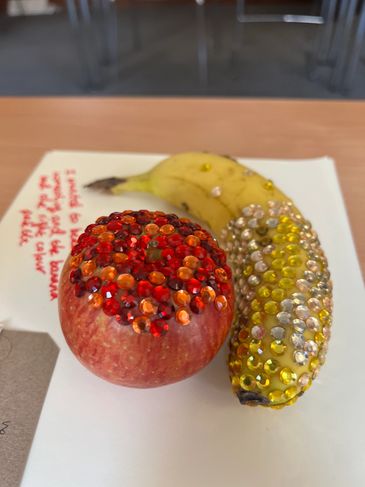
Austin, Age 12 and Amelie, Age 15
The gems on half the apple show the richer people and the normal side shows the poorer. Less fortunate people can sometimes be overlooked or treated badly just because of how they look.
Austin
My artwork was meant to represent how what is presented
on the outside or what is viewed by others isn’t always the same as what is truly going on or meant beneath the surface.
Amelie
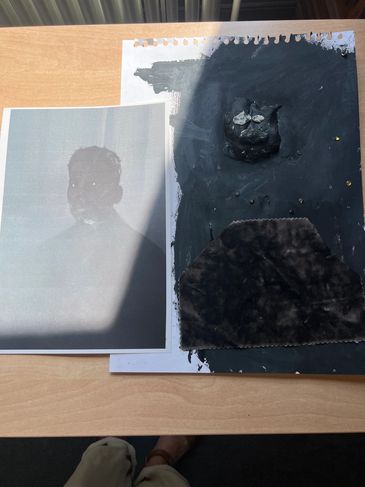
Abdi Raheem, Age 11
Abdi Raheem, Age 11
My artwork was a child's thought hidden away from the real world because it was not taken seriously.

Joel, Age 13
Abdi Raheem, Age 11
Title: Jewelnitis
My work connects to epistemic injustice in the fact that one clip
has lived longer and the other has lived less, depending on how many jewels they have stuck to them. People might judge the younger one more harshly than the older one due to their young age.
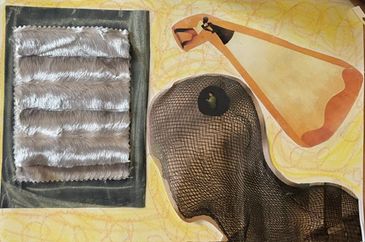
Anaya, Age 15
Title: Hope
My artwork's name is Hope. This links to epistemic justice because it shows a child struggling to voice their thoughts because they are silenced in a contrast of a black and white world. The yellow light displayed in their mind is hope because it demonstrates that children have colourful thoughts in comparison to our black and
Title: Hope
My artwork's name is Hope. This links to epistemic justice because it shows a child struggling to voice their thoughts because they are silenced in a contrast of a black and white world. The yellow light displayed in their mind is hope because it demonstrates that children have colourful thoughts in comparison to our black and white world so if we listen to kids then it will benefit us. The yellow throughout the art mimics light appearing in the darkness which is symbolic of the hope a child's voice can give.
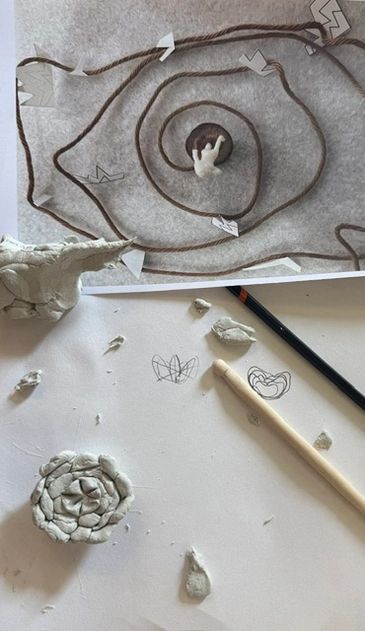
Megan, Age 12
Title: Different Interpretations
I have named the artwork 'Different Interpretations' because I saw the picture and saw a rose but if someone else looked ay it they might see something different. This ties in with epistemic in/justice because it shows how someone may have seen something and another person something different and they ma
Title: Different Interpretations
I have named the artwork 'Different Interpretations' because I saw the picture and saw a rose but if someone else looked ay it they might see something different. This ties in with epistemic in/justice because it shows how someone may have seen something and another person something different and they may have a disagreement or feel as though they haven't been listened to.
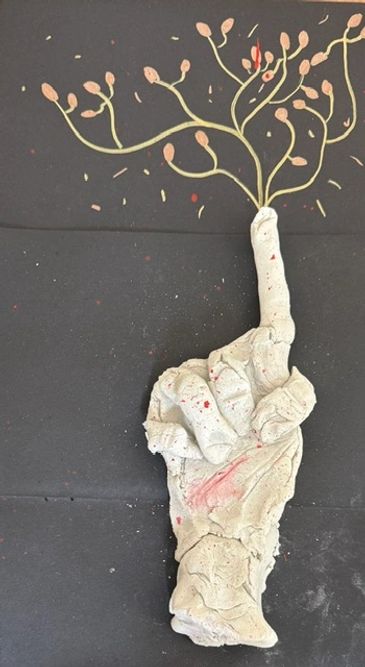
Oliver, Age 9
Title: Pointing the Finger
The pointing finger shows how children can feel singled out when adults don’t listen to them or believe what they say. It can feel like adults are pointing at you and deciding who you are instead of asking you what you think. Children should be listened to because we know things about our own lives that adults might not know.
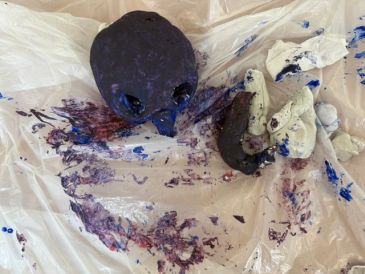
Mudasir, Age 13
Title: The dead warrior
It shows a solider who has “ died” the moment he is ignored and sent off to war.
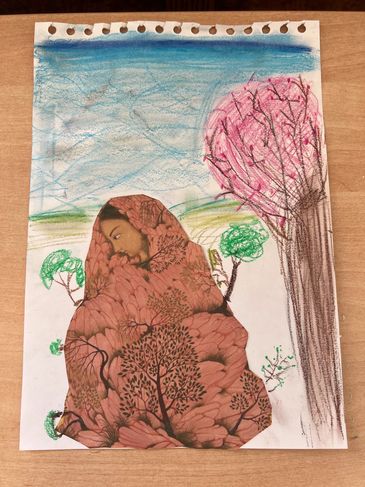
Iqra, Age 14
Iqra, Age 14
Title: Difference
My artwork featured a person standing next to a tree with flowers blooming while another tree without flowers beside stood alone. This for me, symbolised how service givers could ignore or not credit other people because of their difference. In this artwork the difference between both trees is through the presence of
Title: Difference
My artwork featured a person standing next to a tree with flowers blooming while another tree without flowers beside stood alone. This for me, symbolised how service givers could ignore or not credit other people because of their difference. In this artwork the difference between both trees is through the presence of the flowers in one and the absence of it in another. Hence why I decided to call it Difference.
Young Person's Voice - Anaya's reflections
I have always been aware that whenever children tend to share information with adults, they get ignored because adults believe they are wiser and more knowledgeable. They disregard kids’ views because of a prejudiced belief that every child is immature and unaware, so nothing they say must ever be taken into account. However, I was not aware that this is known as Epistemic Injustice, so this session educated me.
It was an eye opener to discover more reasons as to why adults do this, like they don't want to take accountability for their actions or they genuinely believe they are superior just because of their age. I believe this is very backwards thinking that needs to be improved, as everyone deserves to feel heard and seen. This session did exactly that, as it accepted my views and made me feel valued.
It allowed me to communicate my message through art and it was truly fascinating to see what powerful messages artworks can deliver. I chose to do an art piece about the contrast of light and dark. This mirrors a child's thoughts because they believe the whole world is dark and inconsiderate as it doesn't listen to them. The child's mind, however, is light because it possesses many great ideas just like adults do. My message is the hope that a child's light will be brought into the world of research, therefore making it better and more inclusive to multiple perspectives and lives.
I enjoyed participating in this workshop because it included other young people and addressed the message directly to us to help us become aware of the epistemic injustice surrounding us. In doing that, it made us all feel very comfortable and empowered. After we each completed our own artwork, we went around in a circle and explained the choices we made and why we did them. I loved doing this because it provided a deeper insight for both the researchers and kids involved about perspectives. The diversity in the artwork helped me understand how my peers see the world and how important it is that those views get heard.
Research usually tends to focus on adults, so it doesn't always work for kids. Workshops like this help research to move forward and progress because they allow it to become more inclusive to everyone. Listening to kids improves many projects that people are completing, especially if they link to young people. This workshop was truly an amazing experience that allowed me to express my opinions in exceptional ways, so I hope that the people involved know they've truly made a difference!